
Key takeaways:
- Soft US jobs market data triggered a rotation of capital from overheated AI stocks into Bitcoin and gold.
- Bitcoin onchain indicators hint at seller exhaustion while the decline in oil prices opens room for monetary expansion.
Bitcoin reclaimed the $61,000 mark following a disappointing US job market report. Traders grew less certain of a near-term interest rate hike from the US Federal Reserve (Fed) given the worsening labor data. The tech-heavy Nasdaq index sold off, fueling hopes of a capital rotation favoring Bitcoin.

Nasdaq 100 Index futures (blue) vs. Bitcoin/USD (orange). Source: TradingView
The Nasdaq 100 Index erased gains from the three prior days, while Bitcoin distanced itself from Wednesday’s $57,750 low. US non-farm payrolls increased by only 57,000 in June, missing the 113,000 expected, according to Yahoo Finance. The US Labor Department also revised data for April and May downward by 74,000 jobs.
Gold prices reacted positively on Thursday, hinting at potential bullish momentum for scarce assets. The weak economic data prompted investors to cut odds of Federal Reserve interest rate hikes by September to 54% from 64% the prior day, according to the CME FedWatch Tool. Meanwhile, crude WTI oil prices stabilized below $70, opening the door for possible economic stimulus measures

Gold/USD (red) vs. Crude WTI oil (teal). Source: TradingView
Oil prices dropped after the Qatar Foreign Ministry cited “positive progress” in the latest round of discussions between US and Iranian representatives on Wednesday. Gold recovered some of the 8% losses accumulated over the prior two weeks, a possible sign that investors anticipate a less tight monetary policy and further FED balance sheet expansion.
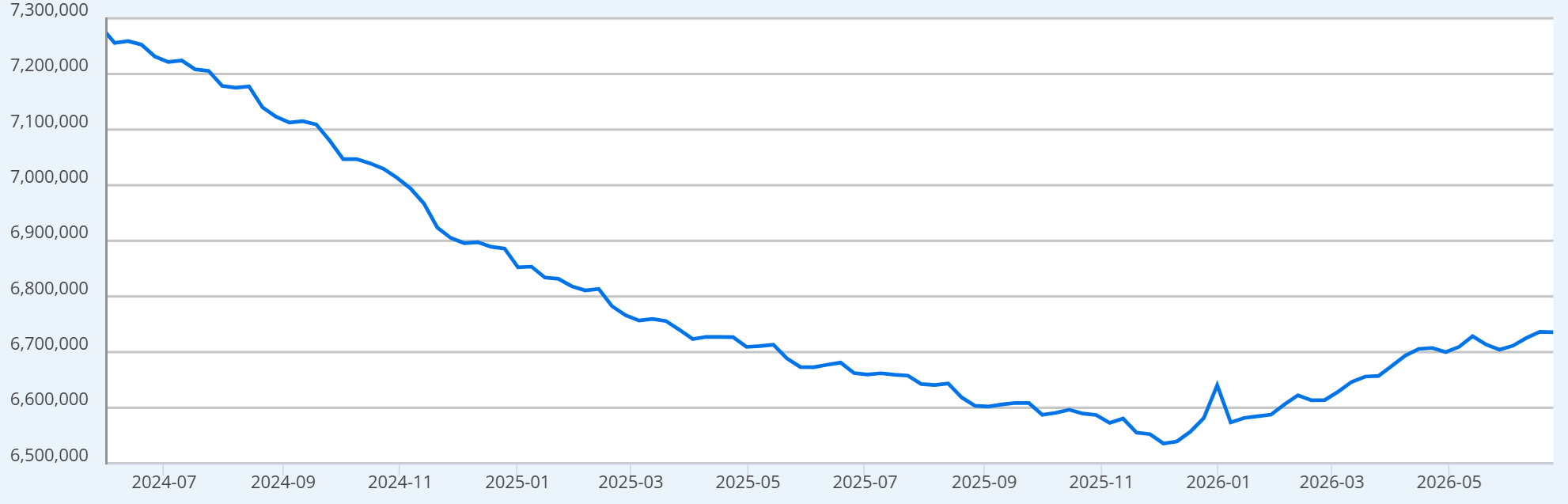
US Federal Reserve total assets, USD millions. Source: FED St Louis
The Federal Reserve balance sheet stagnated at $6.73 trillion, although its mandate allows for $40 billion monthly purchases in short-term Treasuries and bonds. Weak job market data and reduced inflationary pressure are widely seen as catalysts for accelerated liquidity injection, creating incentives to invest in scarce assets, including gold and Bitcoin.
Overheated AI stocks clash with Bitcoin flashing a bottom
Weakness in the AI sector, especially among chipmakers, has led traders to anticipate capital shifting toward alternative assets. Shares of SanDisk, Seagate, Western Digital, and Applied Materials saw intraday losses of 9% or higher on Thursday. In contrast, Bitcoin is showing signs of seller exhaustion two months after rejection at $82,500.
Related: Bitcoin tops $60K amid Fed inflation talks–Is bull trap or $65K next?
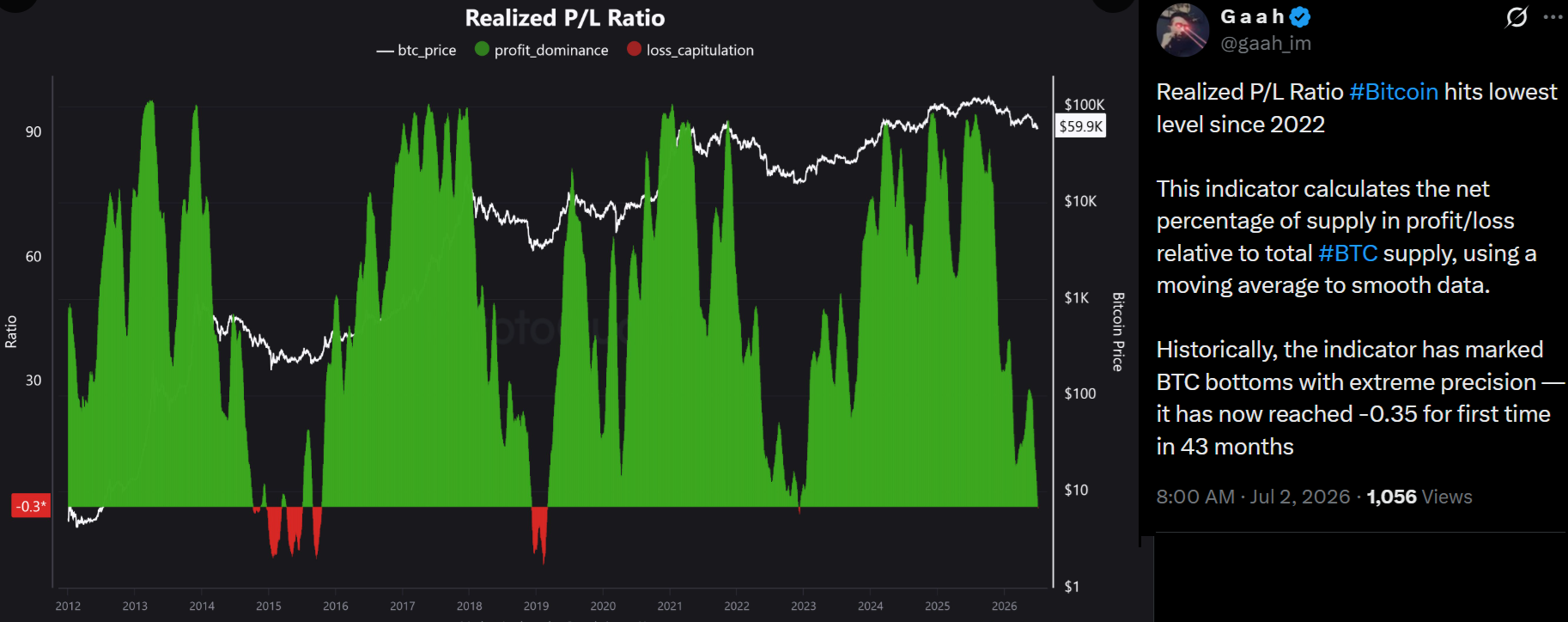
Source: X/gaah_im
Onchain analyst and CryptoQuant author gaah_im said that Bitcoin’s realized profit-to-loss ratio has hit its lowest level since 2022. The net percentage of supply in profit relative to the total supply has turned negative, which historically has marked cycle bottoms with “extreme precision,” according to the analyst. In essence, onchain data hints at further Bitcoin upside.
Part of Bitcoin’s recent weakness stems from traders’ disappointment with Strategy. Despite a healthy 8% net leverage and $56.8 billion in enterprise value, holders faced dilution from accelerated MSTR share issuance used to buy back some debt and cover dividends on preferred stocks.
If weakness in the AI sector accelerates, some of that money will likely rotate into gold and Bitcoin, making a near-term recovery to $70,000 possible.
#Bitcoin #Holds #Weekly #Gains #Jobs #Data #Sector #Weakness