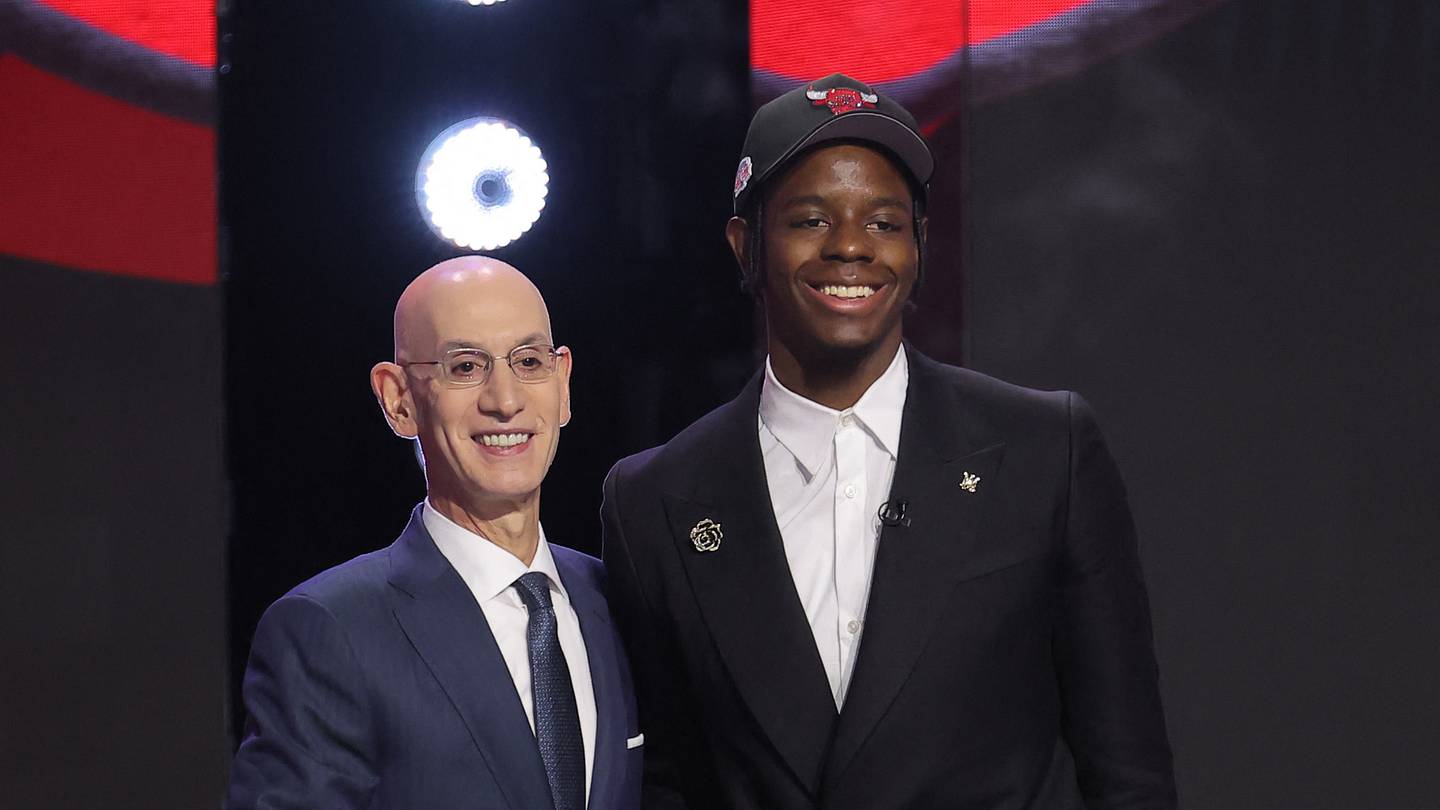
At North Carolina, Caleb Wilson put his spectacular functional athleticism on full display, averaging 19.8 points and 9.4 rebounds on 57.8% shooting en route to Second Team All-American honors. The 19-year-old freshman punished defenses in transition, finished through contact, and covered ground on defense in ways few 6-foot-10 prospects can.
However, the Atlanta native made just seven of 27 threes in college and rarely created off-the-dribble from the perimeter within Coach Hubert Davis’ offense. As a result, entering the NBA, his path toward building on-ball scoring on top of his physical foundation ran through two steep skill gaps which held him back from the top-three group of 2026 NBA Draft prospects.
Four Summer League games later, Wilson appears to be bridging both gaps faster than many projected. He averaged 23.5 points and 7.3 rebounds in Las Vegas on 50% shooting from the field while knocking down 13 of 31 threes, good for a mark of 41.9%. He set the tone in his debut against Memphis, pouring in 35 points on 7-for-11 shooting from deep, the second-most points ever scored in a first Summer League game.
Wilson’s Improved Pull-Up Shooting and Ball Control Fueled His Summer League Scoring Flashes
Wilson shot the ball outstandingly well at Summer League, nailing 13 of his 31 three-point attempts in four games after making just seven of 27 in 24 appearances as a Tar Heel.
More important, though, is how Wilson created his three-point makes. Wilson consistently worked into rhythm pull-ups and step-backs off the dribble by keeping his handle secure against pressure. This level of handling and pull-up shooting prowess stood in stark contrast to the skill gaps left from Wilson’s collegiate play, and reshaped the scope of his scoring upside.
Wilson’s functional athleticism already makes him a strong transition scorer, rim finisher and versatile defender. In particular, he showcased his defensive skill in Las Vegas by averaging 2.5 blocks and 1.3 steals per game with a five-block performance against Utah.
Now, introducing vastly improved shooting and handling into Wilson’s scoring attack, defenders can no longer sit back and concede his jumper to prioritize containing his downhill pressure. As a result, Wilson can work toward imposing his scoring as a consistent mix of relentless rim pressure and devastating shot-making, which elevates his trajectory as a primary scorer if he continues to scale this approach.
The regular season will reveal whether this perimeter growth holds against NBA length and coverages, and Wilson’s 5.3 turnovers per game in Summer League showed the expanded creation responsibility still proved challenging at times. But Wilson spent four games bridging the two steepest skill gaps in his on-ball scoring upside, and stacked on top of his athletic foundation and defensive impact, that progress brings plausible All-NBA upside into the picture.
 Add us as a preferred source on Google
Follow
#Caleb #Wilson #Redefined #Scoring #Upside #Summer #League #Games