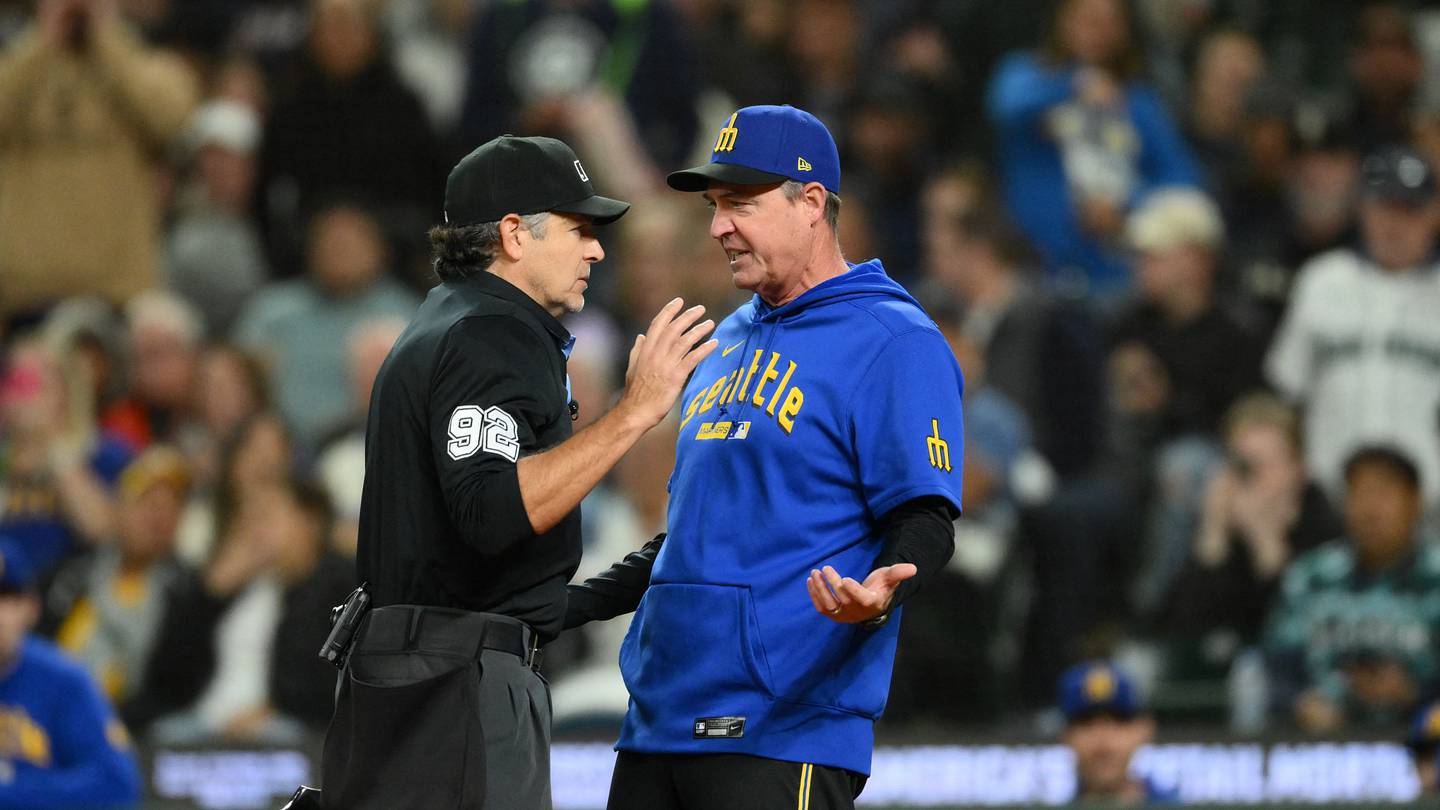
Things really got out of hand on September 3. For a few minutes, home-plate umpire James Hoye was the easiest man at T-Mobile Park for fans to point their finger at. Mariners reliever Carlos Vargas had just surrendered a solo home run to Donovan Walton when an 0-1 cutter spun up and in, hitting Brian Serven. Hoye gathered the umpiring crew, the four men talked it over and warnings were issued to both dugouts.
Poor Dan Wilson, he just wanted to know why. He left the dugout looking for an explanation and received an ejection before even making it remotely close to the umpire. It was very quick. Wilson had every right to question whether one missed cutter called for both teams to be warned.
Yet, in the grand scheme of things, it ranks pretty low on the list of Seattle’s problems. Hoye didn’t make the Mariners strike out 18 times. Nor did he strand 14 runners. The Mariners went 4-for-16 with runners in scoring position during a 7-4 loss to a beaten down 55-86 Athletics team. The Mariners did all of that themselves.
The Mariners Wasted Every Opening the Athletics Gave Them
Seattle forced Athletics starter Jack Perkins to throw 40 pitches during a three-run first inning. That should have been the start of a bad night for the A’s pitching staff. But it became the best inning the Mariners had all night.
Perkins somehow completed three innings despite walking seven batters. Seattle finished with nine hits and eight walks, yet all that traffic produced only four runs. The Athletics’ bullpen then covered six innings while allowing one run and striking out 11.
This was a pitching staff that entered the night with the worst ERA in baseball. Yet they exposed the version of the Mariners we’ve been forced to watch all season long.
We can look back and question Hoye’s warning all we want. But more importantly, we should question an offense that was handed so many chances and barely did anything with them.
It’s difficult to explain 18 strikeouts. That’s nearly two full games’ worth of outs without forcing the defense to make a play. Add 14 runners left on base, and it becomes obvious that the Mariners failed to finish.
Wilson acknowledged afterward that his hitters were pressing and trying to do too much. Umm…yeah, we noticed. And that’s a big problem. Pressure isn’t arriving unexpectedly in September. This is when good teams are supposed to handle their business.
A Soft September Schedule Can’t Save the Mariners From Themselves
We’ve all looked at the Mariners’ September schedule and seen an opening. After grinding through a difficult August, Seattle is entering a stretch loaded with games against some of the worst teams in baseball. The schedule was supposed to give the Mariners one final push toward October. Thursday raised a much uglier possibility: Maybe the Mariners belong among the worst teams in baseball, too.
It sounds harsh, but Thursday’s loss makes the curiosity fair.
Seattle fell six games behind Houston in the AL West and 4 1/2 games out of the final wild-card spot with 21 games remaining. The math still offers a possibility. But performances like Thursday’s keep weakening it.
The Athletics entered with nothing resembling Seattle’s postseason stakes. They still played like the cleaner, calmer team once the game tightened.
Wilson’s ejection was his fourth of the season and his third over the past month. We can appreciate the edge. He stood up for Vargas, demanded an answer and made it clear that he believed the warning was unnecessary.
Seattle also needed the less theatrical parts of winning baseball. They need controlled at-bats, productive outs and one timely hit capable of breaking the game open.
When the season ends, few people will remember the ejection. They’ll remember losses like this one. Getting outclassed by a struggling opponent, runners everywhere and another opportunity kicked aside.
 Add us as a preferred source on Google
Follow
#Mariners #Bigger #Problems #Dan #Wilsons #Ejection #Costly #Loss #Athletics