Crypto markets became the first outlet for investor reaction after US and Israeli strikes on Iran rattled global sentiment over the weekend.
At around 7:30 am (UTC) on Saturday, or in the wee hours of Wall Street, US President Donald Trump posted a video to announce that the US and Israel had launched attacks against Iran. Bitcoin (BTC) immediately reacted and dropped to around $63,000.
Meanwhile, traders rushed to crypto-native platforms to trade commodities futures while traditional markets remained closed.

Including the latest war breaking out, major geopolitical events have frequently occurred over the weekend or late Friday evenings. As crypto is increasingly tied to macro settings, Bitcoin’s 24/7 trading is evolving as a gauge of stock markets while they’re closed.
“The initial [weekend] move to the downside was sharp but contained, [and] Bitcoin never broke its broader market structure. When confirmation came that [Supreme Leader Ayatollah Ali Khamenei] had been killed and the immediate escalation risk appeared limited, price retraced quickly, and Bitcoin held its footing,” Jonatan Randin, senior market analyst at PrimeXBT, told Cointelegraph.
“By Monday morning, traditional market participants who had been watching crypto through the weekend already had a clear read on sentiment: This was a significant geopolitical event, but not a systemic one,” he added.
Bitcoin absorbing geopolitical shocks in real time
Though not always the case, governments and public companies often consider releasing important announcements before or after markets close. A guideline from New Zealand on dealing with financial products is among those that directly state this:
“Unless compelling reasons exist to release the announcement or media release while the affected market is open, it should be made when the market is closed to give investors time to consider the information before the market opens.”
Due to the nonstop trading cycle, crypto investors often don’t have time to assess the information and must react in real time, as observed during the war escalation over the weekend.
“While liquidity can be thinner during these periods, occasionally amplifying short-term volatility, the uninterrupted market ultimately enhances real-time price discovery and accelerates the adjustment process,” Iliya Kalchev, analyst at Nexo Dispatch, told Cointelegraph.
Related: $19B crypto market crash: Was it leverage, China tariffs or both?
It certainly felt that way on Oct. 10, 2025, when the crypto market experienced its largest liquidation event on record. Trump threatened steep tariffs against China, which was enough to tank markets.
This occurred before the US closing bell, so Bitcoin sank along with major stock market indexes. However, crypto markets continued to operate afterward, and liquidations continued, totaling around $19 billion.

For macro traders, this makes crypto a real-time sentiment gauge during geopolitical shocks. When events occur outside traditional trading hours, investors increasingly turn to digital asset markets to express their views on risk, liquidity or inflation expectations before equity, bond or commodity markets reopen.
Crypto’s 24/7 market does not stop at Bitcoin or other spot assets. Much of the activity now flows through perpetual futures across centralized and decentralized exchanges, while institutions are also experimenting with tokenized real-world assets (RWAs) that bring traditional financial instruments onto blockchain rails.
24/7 trading open beyond spot crypto
As Bloomberg reported, perpetual futures decentralized exchange Hyperliquid became a popular trading platform for commodities and traditional assets, like oil and precious metals.
Hyperliquid’s volume also usually drops on weekends, DefiLlama data shows. But in the past weekend of geopolitical unrest, its volume remained high and matched that of business days.

Bitwise chief investment officer Matt Hougan added that Tether’s tokenized gold XAUT had a spike in trading volume over the weekend, while prediction markets volume set new records.
Weekend trading demand is increasingly reflected in traditional finance through surging institutional interest in RWAs. Tokenized assets inherit some of crypto’s market features, including cross-border accessibility and trading outside conventional market hours.
Related: Banks can’t seem to service crypto, even as it goes mainstream
McKinsey and Standard Chartered estimate tokenized assets could reach around $2 trillion by 2030, while Boston Consulting Group projects the market could grow to between $16 trillion and $30 trillion over the same period.
Traditional markets are also moving to extend their trading hours. In December, Nasdaq sought approval for a 23-hour trading system, split into day and night sessions with a maintenance hour in between, which wasn’t well received by financial services firm Wells Fargo.
“I cannot think of an action that single-handedly gamifies the stock market even more than it has already become. This is the epitome of making trading even more like gambling,” Wells Fargo’s trading desk said in a note to clients, as reported by CNBC.
In January, the New York Stock Exchange said it is developing a 24/7 blockchain platform for stocks and exchange-traded funds.
Crypto markets absorbing global shocks in real time
Weekend geopolitical shocks are increasingly testing the structure of global markets. While traditional financial systems pause between trading sessions, crypto continues to absorb information and reflect investor sentiment in real time.
“Bitcoin has evolved into a highly sensitive macro asset, reacting not only to technology-sector dynamics but also to shifts in liquidity conditions, monetary policy expectations and geopolitical tensions,” Kalchev said.
Bitwise’s Hougan said the weekend trading activity made traditional stock exchanges look “archaic.”
While more traditional finance venues are exploring extended or uninterrupted trading systems, Hougan said the blockchain markets’ performance during the past weekend’s military escalation suggested the blockchain transition may happen faster than he previously expected. He claimed he previously expected traditional finance to move onchain within 10 years.
Magazine: Would Bitcoin really be at $200K if not for Jane Street? Trade Secrets
Cointelegraph Features and Cointelegraph Magazine publish long-form journalism, analysis and narrative reporting produced by Cointelegraph’s in-house editorial team and selected external contributors with subject-matter expertise. All articles are edited and reviewed by Cointelegraph editors in line with our editorial standards. Contributions from external writers are commissioned for their experience, research or perspective and do not reflect the views of Cointelegraph as a company unless explicitly stated. Content published in Features and Magazine does not constitute financial, legal or investment advice. Readers should conduct their own research and consult qualified professionals where appropriate. Cointelegraph maintains full editorial independence. The selection, commissioning and publication of Features and Magazine content are not influenced by advertisers, partners or commercial relationships.
#Bitcoin #RealTime #Sentiment #Gauge #Weekend #Warmongering
]]>Pass rushers are always in demand in free agency, and there’s a deep group of them available this season.
The list is led by Trey Hendrickson, who had back-to-back 17.5-sack seasons with the Bengals in 2023 and 2024, but there are more enticing players behind him. All teams could use more pass rushing help, and those pass rushers will dominate this free-agency cycle.
Advertisement
Here are the top five edge defenders available in free agency:
1. Trey Hendrickson
Hendrickson is one season removed from leading the NFL with 17.5 sacks and finishing second in NFL Defensive Player of the Year voting. There’s a reason he’s the No. 1 overall available free agent this offseason. Hendrickson is 31 years old and coming off an injury-plagued season with the Bengals in which he recorded only four sacks, but getting out of Cincinnati after a prolonged contract dispute could rejuvenate him.

Trey Hendrickson of the Cincinnati Bengals posted back-to-back 17.5 sack seasons in 2023 and 2024. (Photo by Lauren Leigh Bacho/Getty Images)
(Lauren Leigh Bacho via Getty Images)
2. Jaelan Phillips
Phillips has an injury history that limited him to seven games between 2023 and 2024. But he did play all 17 games last season between the Dolphins and Eagles, including a midseason trade to Philadelphia, and will be just 27 years old next season. Phillips is a productive pass rusher if healthy and his prime age is a plus as well.
Advertisement
3. Odafe Oweh
Oweh is a former first-round pick who just turned 27 and has 30.5 career sacks, including a 10-sack season in 2024. The Ravens traded him in the middle of last season to the Chargers, which was curious, but Oweh had 7.5 sacks in 12 games with Los Angeles. He plays a prime position, has a good draft pedigree and is still relatively young. He’ll get a nice contract.
4. Khalil Mack
Mack just turned 35 and now that he has said he’ll return for another season, he’ll have plenty of teams interested. Mack is coming off another solid season with the Chargers and is still a productive veteran. He has nine Pro Bowls and an NFL Defensive Player of the Year award on his résumé. He can still be an asset in his mid-30s.
Advertisement
5. K’Lavon Chaisson
Chaisson seemed to be on his way out of the NFL not long ago. He didn’t pay off as a first-round pick of the Jaguars, he was cut by the Panthers before the 2024 season but then had a promising year with the Raiders. Then he signed with the Patriots before last season and was a big part of an AFC championship defense with 7.5 sacks. As he enters his age-27 season, he looks like a classic case of a first-round talent who needed time and the right scheme to finally thrive.
#NFL #free #agents #Trey #Hendrickson #leads #top #edge #defenders
]]>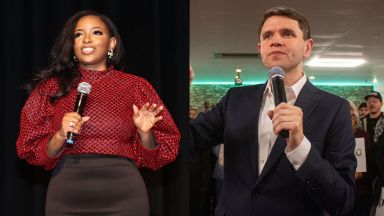
The March 2026 Texas Senate primary election made quite the headlines as Democrats vie to flip the state from red to blue. Representative Jasmine Crockett came into the election with a strong background, best known for her strong argumentative style and past viral moments in Congress. However, Representative James Talarico came in full force. Meanwhile, the Republican primary ended up in a runoff. So, who won the Democratic and Republican Texas Senate primaries?
Find out who the winners of the 2026 Texas Senate primary election were for the Democrats and Republicans.
Who Won the Democratic Texas Senate Primary 2026?
Talarico was the winner of the Democratic Texas Senate nomination. According to poll results, Talarico received 52.8 percent of the votes, while Crockett got 45.9 percent.
While speaking to supporters on Tuesday evening, Talarico said, “We are not just trying to win an election. We are trying to fundamentally change our politics, and it’s working.”
Speaking with Politico ahead of the election, Talarico discussed going head to head against either of his Republican opponents: Attorney General Ken Paxton and Senator John Cornyn. Talarico called them both “extraordinarily weak” in the interview.
“Paxton and Cornyn, they’re different,” he acknowledged. “Paxton was guilty of illegal corruption. That’s why my colleagues and I impeached him in the Texas House. But Cornyn is guilty of legalized corruption. He was the deciding vote on the Big, Ugly, Bill, which kicked millions of [Texans] off their health care, took food out of the mouths of hungry Texas kids all to give tax breaks to his donors. Both of them are guilty of using their public offices to enrich their donors — Ken Paxton in an illegal way, but John Cornyn in a legal way. I look forward to prosecuting the case against either of them — whoever makes it out.”
Who Won the Republican Texas Senate Primary?
Republican Cornyn was forced into a runoff election with Paxton. Although neither was declared the winner, Cornyn received the most votes — 41.9 percent — and Paxton got 40.7 percent. The runoff will take place on May 26.
What Is a Runoff Election?
A runoff is a second election to determine a winner when no candidate from the prior election met the required threshold of votes. A runoff election can be held for both primary and general elections in the U.S.
#Won #Senate #Primary #Hollywood #Life
]]>
This post may contain affiliate links that at no additional cost to you, we may earn a small commission. Read the Disclosure Policy for more information.
Last Updated on March 4, 2026 by Katie
Upwork can feel like a busy market at rush hour.
Lots of noise, lots of sellers, and plenty of low offers flying around. Still, a clear service and a simple promise cut through faster than most people think.
If you’re searching for how to make money from Upwork, the best starting point isn’t “apply to everything”.
It’s picking one service, turning it into a neat package, and making the outcome obvious (more leads, more sales, less work, faster delivery).
Below you’ll find a practical list of profitable services for 2026, plus a quick way to choose the best one if you’re new.
The people who earn more usually specialise, show clear results, keep their profile tight, write tailored proposals, reply quickly, and build repeat clients instead of chasing one-off tasks.
- Survey Junkie: Earn money by taking surveys and giving your opinion on new products. Over $1.5 million is paid out to members monthly! Join Survey Junkie now.
- American Consumer Opinion: Get paid for your opinion by taking surveys and participating in research studies. Earn between $1 and $50 per survey. Join ACOP Now.
Most Profitable Services to Sell on Upwork

Some services pay well because they sit close to revenue. Others pay well because they lead to monthly retainers.
Upwork’s own data often highlights the same pattern: if you have specialised skills and offer clear business outcomes, you can command higher rates.
A strong offer is like a shop sign on a crowded street, it tells the right buyer to stop.
1) Video editing and short-form content packages
Short-form editing turns long footage into punchy clips. Work includes captions, hooks, music, colour fixes, and clean cuts.
Brands post daily in this age of technology, so speed matters. Premiere Pro, DaVinci Resolve, and CapCut help a lot.
To make the most money, niche down into areas such as podcast-to-clips, property tours, or course promos.
Typical rates run £150 to £800 per video. Retainers often land around £2,000 to £8,000 per month.
Further reading: 11 fun ways to make money editing ideos as a beginner.
2) LinkedIn profile optimisation
This service reshapes a profile into a sales page. Tasks include headline rewrites, keyword-heavy summaries, and tighter job bullets.
Check this LinkedIn optimisation guide for tips.
It sells well because hiring and networking stay competitive. A good ear for tone and proof helps.
To get chosen over others offering similar Upwork services, niche down and focus on areas such as founders, tech job seekers, or sales leaders.
Include a simple content plan as an add-on. Expect £100 to £800 per profile, and £1,000 to £4,000 per month with steady bookings.
3) Online course creation for businesses
Another one of the top ideas for how to make money from Upwork is online course creation.
Businesses pay for training that saves time. Work includes outlining lessons, writing scripts, and building slides or worksheets.
It’s popular because internal training needs keep growing, and companies use training videos in all areas of their business.
Tools like Canva, Loom, and basic instructional design matter. To get noticed, niche into areas like onboarding, compliance refreshers, or software training.
Many clients also want quizzes and checklists. Rates often sit at £1,000 to £8,000 per course, and £3,000 to £12,000 per month for specialists.
Further reading: How to make money online by creating courses.
4) Website building for small businesses
Website builds cover pages, forms, and basic tracking. The work often includes fixes, speed checks, and mobile layouts.
AI tools can speed up drafts, but clients still pay for judgment. Skills you need to succeed include WordPress, Shopify, testing, and simple APIs.
Niche into local service sites, Shopify store builds, or membership websites to make the most money and to build up a reputation in one area.
Offer care plans for updates and backups. Typical projects range £500 to £10,000, and experienced devs can reach £6,000 to £25,000 per month.
Further reading: How to start a freelance website design business + get your first client.
5) Voiceover work for courses, ads and movie trailers
Voiceover turns scripts into clear, usable audio. Work includes recording, editing, and delivering clean narration files fast.
Demand stays high because video learning keeps growing and movies/TV and adverts are always going to be around.
A quiet space, a decent mic, and basic audio editing skills will help you to succeed.
Useful tools include Audacity or Adobe Audition. To make a name for yourself, niche into e-learning narration, brand ads, or character reads.
For a beginner-friendly overview, see this guide on how to start a voice over career from home.
Expect £100 to £1,000 per recording, and £1,500 to £6,000 per month with repeat clients.
6) SEO audits and monthly SEO support

SEO work starts with technical checks and keyword research. Then it moves into content plans, on-page fixes, and reporting.
It stays popular because rankings bring steady leads, so businesses will pay big money for this service.
To succeed, you’ll need to know how to use Google Search Console, SEO tools, and basic WordPress site tools.
To make the most money, it’ll pay to niche into one area such as local SEO for clinics, Shopify SEO, or B2B SaaS blogs.
Audits often cost £400 to £2,500. Retainers can reach £1,000 to £8,000 per month, making this a reliable way to learn how to make money from Upwork.
7) Copywriting for landing pages and ads
Copywriting sells offers with fewer words. Work includes research, angle testing, and polishing the call to action.
It’s in demand because words directly affect sales. Skill in persuasion and brand voice matters most.
You could niche into webinar funnels, DTC product pages, or service homepages and add A/B test ideas as a small extra.
Rates often run £150 to £1,500 per piece. Monthly income can hit £2,000 to £10,000 with repeat clients, a classic path for how to make money from Upwork.
Further reading: How to become a freelance writer with no experience.
8) Content writing and blog production
Content writing covers blogs, guides, edits, and refreshes. This is a popular Upwork service as businesses need regular fresh content to stay relevant.
To succeed, you’ll need good research skills, clear writing, and basic SEO knowledge to format content for search engines properly.
Reliable deadlines beat fancy language every time. To make the most money, niche into finance explainers, health content, or B2B how-tos.
Offer a monthly bundle of four posts. Projects usually pay £80 to £600 per article, and £1,500 to £8,000 per month at volume.
Find extra work on these freelance writing job boards.
9) Translation services for blogs and video producers
Translation gets content seen by new markets worldwide. Work includes adapting tone, not just swapping words.
It’s popular as creators push global audiences. To succeed, you’ll need strong grammar, clear writing and local cultural knowledge.
Specialisation helps, like legal, medical, or tech topics andf you could niche into YouTube subtitles, SaaS help docs, or e-commerce listings.
Typical projects range £200 to £2,500. Monthly income often sits at £1,500 to £7,000 with ongoing clients.
Further reading: How to become a freelance translator + where to find jobs.
10) Graphic design for brand kits and marketing assets
Graphic design work covers logos, brand guides, and templates. Clients may also want pitch decks and social assets.
This is a popular Upwork service to offer because launches never stop. Skills you need to succeed include layout, typography, and Figma or Adobe tools.
An idea would be to niche into skincare packaging, startup decks, or Canva templates, to make yourself stand out.
Projects often pay £300 to £4,000. Monthly income can reach £2,000 to £10,000 when you sell packages.
Related reading: 17 simple ways to make money with Canva.
11) UX and UI design for apps and websites
UX work maps flows before pixels. UI work turns those flows into clean screens. It pays well because good design lifts conversion and lowers churn.
To get started, knowledge of igma, design systems, and basic research skills helps. You could niche into checkout redesigns, onboarding, or SaaS dashboards.
To get started, offer a “quick usability review” package to show clients what you can do.
Projects commonly land at £1,000 to £10,000. Experienced designers can reach £4,000 to £15,000 per month.
12) Paid ads management (Google, Facebook,TikTok)

Ad management is one of the best ideas for how to make money from Upwork.
Ads managers set up campaigns and test creatives. This type of Upwork service includes ad tracking, weekly reporting, and giving landing page feedback.
It’s popular because businesses pay for clear ROI and need a steady flow of leads. Platform knowledge and calm number sense matter.
To build up a reputation, you could niche into lead gen for trades, e-commerce scaling, or local service ads.
Setup projects often run £300 to £2,000. Monthly management can be £500 to £5,000+ per account.
Learn more in this guide on how to become a Facebook ads manager.
13) Product Photography
With the e-learning and Shopify store boom, product photography has become more essential than ever.
If you’re handy with a camera or smartphone, you could create clear and engaging product photos for local businesses.
Start by building up a photography portfolio that you can share with others. Then, set up your product photography gig on Upwork, telling people what you can do for them.
Create different gig packages for one-off shots and monthly retainers to cater to different budgets.
With a itte work, you could earn between a few hundred dollars to $2,000+ monthly.
Further reading: 17 ways to get paid to take pictures with your phone.
14) Social media management with a clear content system
Social media management covers content planning, posting, and replies. Simple reporting keeps clients calm and confident.
It’s in demand because consistency is hard to maintain, so you can step in and take social media management off a busy business owner’s plate.
Skills you need to succeed include platform know-how, basic design, good writing skills, and excellent communication skills.
To make the most money, niche into one area such as Instagram for salons, Facebook for local shops, LinkedIn for B2B, or TikTok for food brands.
A one-off content plan can cost £150 to £600.
Monthly management ranges £400 to £3,000 per client, making this idea for how to make money from Upwork worthwhile.
Email marketing includes writing sequences and building automations that turn readers into buyers.
It pays well because email drives repeat sales and businesses don’t have time or the know-how to do this successfully themselves.
To make a name in this sector, you could niche into Shopify abandoned cart, SaaS onboarding, or creator newsletters.
A good idea for your first Upwork gig would be to offer “one welcome flow plus two campaigns” and clients may keep you on a retainer if you get results.
Projects often cost £300 to £3,000. Retainers can reach £1,000 to £10,000 per month.
16) Data analysis and dashboards (Excel, SQL, BI tools)
Data analysts turn messy data into answers. Work includes cleaning, charts, and simple dashboards.
It’s a popular gig to offer on Upwork because teams want decisions faster and this service will help companies make better future decisions.
If you’re new to this industry, start by niching into one area such as sales dashboards, marketing performance, or inventory forecasting.
Make sure to show client testimonials (even for free work) and add a short video walkthrough of how you work to give potential clients confidence.
Projects often pay £250 to £5,000. Monthly income can be £2,000 to £12,000 for experienced analysts.
17) Market research and competitor reports
Market research work collects pricing, reviews, and positioning information. This is useful as it becomes a clear report that clients can act on.
It’s common for product launches and rebrandsand skills you will need to succeed include critical thinking and tidy writing.
An idea would be to niche into Amazon product research, SaaS competitor grids, or local market studies.
For your first Upwork gig, offer to deliver a one-page summary plus an appendix.
Projects often pay £200 to £2,500. Monthly income can reach £1,500 to £7,000 with steady work.
18) Executive virtual assistance for busy owners

Executive VAs look after a founder’s calendar and also manage email inboxes, bookings, and light projects such as customer support and blog management.
The beauty of this type of work is that you can offer whatever extra services you have skills in, such as writing, admin, proofreading, graphic design or market research.
Discretion and good communication matter the most and you’ll need a good understanding of tools like Google Sheets, WordPress, booking tools and social media.
To make yourself stand out, you could niche into podcast virtual assistance, property admin, or business marketing support.
Rates often run £15 to £40 per hour. Monthly retainers usually sit at £800 to £5,000, depending on hours.
Further reading: How to become a virtual assistant with no experience.
19) Customer support (email, chat, helpdesk)
Customer support workers handle tickets, refunds, and FAQs from customers by email, text and phone chat.
It also tracks common issues and reports patterns. Demand stays strong as shops and SaaS grow and the growing demand by customers for human contact.
Calm writing and problem-solving abilities matter as you may often be dealing with angry people. Zendesk and other helpdesks help you move faster.
To get started in this industry, you could niche into Shopify support, weekend coverage, or technical triage (depending on where your skills lie).
Pay often lands at £12 to £30 per hour, or £1,000 to £6,000 per month, and how to make money from Upwork often comes down to reliable long-term support contracts.
Further reading: 21 companies offering customer service jobs from home.
How to Win Clients on Upwork (Without Begging on Price)
Winning on Upwork isn’t about sounding clever. It’s about reducing risk for the buyer.
Clients want quick proof, a clear scope, and steady communication.
This year, demand keeps shifting towards specialists who can use AI tools well, not people who simply paste prompts.
Keep it simple for two weeks. Pick one core service, send tailored proposals daily, and track replies. Then tighten what’s working.
Your price hurts less when the outcome feels certain.
Profile and portfolio: make your first 10 seconds count
Put your niche in the headline, not a job title. In the first two lines of your overview, state who you help and the result you deliver.
Add two to four portfolio pieces, even if they’re self-made samples. Show before and after screenshots, short clips, or a mini case study with numbers.
Keep the profile focused on one core offer, so clients don’t have to guess.
If you’re newer and want more ideas, start with these easy freelance jobs for beginners. Finally, sprinkle in relevant keywords, but only where they read naturally.
Proposals that feel like a helpful mini-plan
Use a five-part structure. Start with a friendly greeting and a one-line mirror of their goal.
Next, give a quick diagnosis based on the brief. Then outline your plan and timeline in plain steps.
After that, set scope boundaries so the job stays clean. End with a clear next step, such as a short call or two questions.
Add one small bonus that doesn’t steal your time, like a checklist or a quick audit.
This approach supports how to make money from Upwork because it shifts the talk from cost to outcomes and trust.
Final Thoughts on How to Make Money from Upwork
Upwork rewards focus, not frenzy.
Pick one profitable service, build two strong samples, and send tailored proposals every day for two weeks. Then adjust based on replies, not guesses.
Aim for repeatable packages, clear scopes, and fast communication. Those habits attract better clients and lead to steady retainers.
If you want a calm path forward, learning how to make money from Upwork gets much easier when you sell a clear result, deliver on time, and make it simple for clients to hire you this week.
Want more freelancing ideas?
Check this guide on how to make money on Fiverr without skills.
Summary

How to Make Money from Upwork: 19 Profitable Services That Clients Buy
Description
How to Make Money from Upwork: 19 Profitable Services That Clients Buy
Author
Katie Lamb
Remote Work Rebels
Publisher Logo

#Money #Upwork #Profitable #Ideas
]]>Bitcoin (BTC) bulls are eyeing a move back toward $80,000 in March, with at least three indicators flashing increasing upside momentum.
Key takeaways:
-
Bitcoin jumped by over 5% toward $72,000 on Wednesday.
-
Multiple indicators, including a symmetrical triangle, hint at an extended price rally toward $80,000.
Bitcoin invalidates bearish chart pattern
On Wednesday, BTC’s price showed signs of invalidating what initially appeared to be a bear pennant.
The BTC/USD pair pierced the pennant’s upper trend line after jumping 5.21% to around $71,900. Its breakout came alongside a rise in trading volume, implying stronger conviction behind the rally.

That simultaneously increased the odds of a symmetrical-triangle bullish reversal.
A symmetrical triangle forms when price makes lower highs and higher lows, compressing into a tightening range.
It resolves when the price breaks either of the trendlines and moves by as much as the pattern’s maximum height.
In BTC’s case, the triangle’s widest range is roughly $63,000 to $71,000–$72,000.

A standard measured move above the upper trend line points to about $80,000 in March if the breakout sticks. The level aligns with BTC’s 100-day exponential moving average (100-day EMA, the purple line).
Related: US spot Bitcoin ETFs add $225M as BlackRock’s IBIT offsets redemptions
BTC’s next hurdle is the 50-day EMA (red) near $74,400. A rejection there would weaken the breakout and raise the odds of a pullback toward the 20-day EMA (green) around $68,700.
BTC futures gap remains unfilled at $80,000
The triangle’s $80,000 measured target also overlaps with an unfilled CME futures gap, turning the area into a clear magnet zone for the bulls.
A CME gap happens because CME Bitcoin futures stop trading over the weekend. If Bitcoin’s spot price moves while the futures market is closed, the latter can reopen at a new level, leaving an empty price zone on the chart.

As of Wednesday, that gap has been sitting around $79,660–$81,210 since early February.
Nine of the last 10 CME gaps have been filled since August 2025, which is why traders may view the $79,660–$81,210 region as a high-priority target as spot and futures prices re-align.
Polymarket raises odds of $80,000 Bitcoin in March
Polymarket, a crypto-based prediction market where users trade contracts on real-world outcomes, is showing a clear bullish shift for BTC in March.
Traders now assign 40% odds that Bitcoin reaches $80,000 on Wednesday, up from 20% a day ago. The $75,000 target carries even stronger conviction at 70%, up from 40% yesterday.

At the same time, the odds of the BTC price reaching $65,000 and $60,000 in March are priced lower than before, suggesting the crowd is trimming downside expectations.
This article does not contain investment advice or recommendations. Every investment and trading move involves risk, and readers should conduct their own research when making a decision. While we strive to provide accurate and timely information, Cointelegraph does not guarantee the accuracy, completeness, or reliability of any information in this article. This article may contain forward-looking statements that are subject to risks and uncertainties. Cointelegraph will not be liable for any loss or damage arising from your reliance on this information.
#Signs #80K #Logical #Target #Bitcoin #Bulls
]]>Malik Willis $30 million contract value called ‘crazy’ by Hall of Fame QB originally appeared on The Sporting News. Add The Sporting News as a Preferred Source by clicking here.
The Green Bay Packers turned Malik Willis into a free agent quarterback who will make a lot of money.
Advertisement
But with the rumors of Willis potentially landing a contract for $25 million or $30 million per year, people are taking notice.
One of those people is Hall of Fame QB Kurt Warner. And Warner thinks the potential cost is “crazy” given what is known about Willis so far.
“Took a break from draft prep to dive into #MalikWillis tape over last couple of years, being that he is one of hottest names as we head into Free Agency!” Warner wrote on X. “My conclusion is that there is really 28 dropbacks (I took out screens, quick pick-n-stick throws at 5 yrds & quick scrambles) over last 2 years that will determine his future! That is crazy to think about if we are talking $25-30mil/year! #StudyBall coming so you can come up with your own opinions & assessment!”
MORE: Cowboys show how NFL salary cap is (mostly) fake
Advertisement
On the one hand, Warner is right.
Willis struggled with the Titans and only found his way with the Packers while operating as an occasional fill-in for Jordan Love. There isn’t a huge sample size here.
On the other hand, it’s not fair to Willis to say he’s being evaluated just on his basic dropbacks. Given his talent as a runner, Willis has to be examined on the full package. Whoever signs him will be doing so to let him be a dual threat, not just a dropback passer.
At the end of the day, it also doesn’t matter much how Warner feels. Multiple teams need a QB, and Willis is the clear best option in free agency. If a bidding war commences, he’s going to end up with quite the payday.
Advertisement
Maybe it’s crazy. But it’s also the way this offseason is set up to play out, whether Warner likes it or not.
Willis will just have to prove himself, wherever he goes, to make Warner a believer.
More NFL news:
#Malik #Willis #million #contract #called #crazy #Hall #Fame
]]>
Todd Meadows, known as one of the stars from the reality TV series Deadliest Catch, died on February 25, 2026, Captain Rick Shelford announced in a Facebook post. The news of Meadows’ tragic death surfaced a week later on March 2, when Shelford’s post made the rounds online. As viewers grapple with the loss, many are also wondering what happened to him and how he died on the job.
The Discovery Channel said in a statement that it was “deeply saddened by the tragic passing of Todd Meadows,” calling it “a devastating loss, and our hearts are with his loved ones, his crewmates, and the entire fishing community during this incredibly difficult time.”
Learn what happened to Meadows here.
How Old Was Todd Meadows From Deadliest Catch?
Meadows, a rookie deckhand, was 25 when he died.
What Happened to Todd Meadows?
According to Shelford’s Facebook post, Meadows died on board the Aleutian Lady on the Bering Sea.
“We lost our brother, Todd Meadows. Todd was the newest member of our crew, he quickly became family,” Shelford continued in his statement. “His love for fishing and his strong work ethic earned everyone’s respect right away. His smile was contagious, and the sound of his laughter coming up the wheelhouse stairs or over the deck hailer is something we will carry with us always.”
The tribute post featured various images of Meadows, and Shelford continued in his statement, “Todd’s love for his children, his family, and his life was evident in everything he did. He worked hard, loved deeply, and brought joy to those around him. Right now, our hearts are broken in a way that words can’t fully express. We ask that you lift Todd’s children and family in prayer and keep them in your thoughts as they face the days ahead without him. Todd will forever be part of this boat, this crew, and this brotherhood. Though we lost him far too soon, his legacy will live on through his children and in every memory we carry of him. Rest easy brother, till we meet again.”
How Did Todd Meadows Die?
Shelford noted in his statement that Meadows died on board the Aleutian Lady ship. According to TMZ, the late deckhand got into a fishing-related incident while filming; sources said it was unclear whether his tragic death was caught on camera.
#Happened #Todd #Meadows #Deadliest #Catch #Death #Hollywood #Life
]]>Social media platform X will suspend creators from its revenue-sharing program for 90 days if they post AI-generated war footage without clearly disclosing that the content was created using artificial intelligence.
On Wednesday, X’s head of product, Nikita Bier, said the rule aims to maintain “authenticity of content on Timeline” during wartime events, when misleading media can spread quickly.
“During times of war, it is critical that people have access to authentic information on the ground,” Bier wrote. “With today’s AI technologies, it is trivial to create content that can mislead people.”
Related: Bitcoin holders show ‘zero panic‘ as BTC hits $70K amid Middle East tensions
The move adds financial penalties to X’s existing moderation tools, linking disclosure of AI-generated media to monetization eligibility.

Monetization enforcement tied to AI disclosure
Unlike traditional moderation measures such as labels or removals, the new rule targets the platform’s creator economy by restricting access to revenue-sharing for policy violations.
X said creators who publish AI-generated conflict footage must clearly disclose that the content was created with artificial intelligence. Failure to do so could lead to a 90-day suspension from the program.
Related: 6 Polymarket traders net $1M on US-Iran strike, spark insider fears: Report
Under the update, posts flagged by Community Notes or detected through metadata or other signals from generative AI tools may trigger enforcement.
Accounts that repeatedly post undisclosed AI-generated conflict videos may face permanent removal from X’s creator revenue-sharing program.
The policy applies specifically to videos depicting armed conflicts and does not amount to a broader ban on AI-generated content posted to the platform.
Middle East conflict raises misinformation concerns
The announcement comes as geopolitical tensions in the Middle East continue to dominate online discussions across social media platforms.
On Feb. 28, the United States and Israel launched joint airstrikes on Iran. Bitcoin (BTC) briefly dropped to about $63,000 but later recovered. At the time of writing, it traded near $70,000, according to CoinGecko.
AI is also becoming more deeply embedded in modern conflict environments. On March 1, the US military used Anthropic’s Claude AI model to assist with intelligence analysis and targeting during operations linked to the Iran strikes.
Magazine: Bitdeer sells all Bitcoin, Metaplanet rejects misconduct claims: Asia Express
#Targets #Undisclosed #Conflict #Videos #Revenue #Ban
]]>TimesofIndia.com in Mumbai: West Indies were going along nicely at the halfway mark of their virtual quarter-final clash against India at the Eden Gardens on Sunday.
At 82/1, West Indies had a set batter in Roston Chase, an in-form Shimron Hetmyer at the other end, and plenty of firepower waiting their turn in the dugout. While some fielding lapses prevented India from adding to the wickets column, they managed to keep a close grip on proceedings with a tactical masterclass.
Both Jasprit Bumrah and Varun Chakravarthy had bowled only one over each, and Axar Patel had bowled three when the two right-handed openers were still at the crease.
Captain Suryakumar Yadav brought the left-arm spinner into the attack early due to the better matchup, and Varun Chakravarthy’s delayed entry gave the spinner a better chance to take wickets against the fiery middle order that followed. The hosts controlled most of the innings not just through how they managed the overs, but also by paying attention to favourable matchups.

From Bumrah’s introduction against Hetmyer to the angled plan for Sherfane Rutherford, India were a step ahead with their planning and have only gotten better with every game in the ongoing 2026 T20 World Cup. At the end of the 14th over, when drinks were called, West Indies were 119/3, with the dangerous pair of Rutherford and Rovman Powell at the crease. During the break, coach Gautam Gambhir went straight to Hardik Pandya and raised his arms to point towards the third-man region. Pandya was set to bowl the next over from the High Court End, and Gambhir wanted him to angle it away from the left-hander, probably making him play towards the region between third man and point.
Pandya stuck to the plan and angled an off-cutter away from the batter, who could only edge it to Sanju Samson behind the stumps. The bowler was delighted and raised his arms towards the dressing room while Rutherford took the long walk back. There have been plenty of such small moments where India have exhibited tactical brilliance, and their handling of Bumrah, in particular, has been very match- and matchup-specific so far.
Surya continued to use him in different phases. He was unleashed for two overs in the games against South Africa, Pakistan and the Netherlands, but bowled only one over each against Zimbabwe and the West Indies during the powerplay. Against Namibia, he bowled all his overs after the powerplay. Gambhir explained that the calls were very opposition-specific and were taken to give other bowlers some cushion during difficult periods of play.

“I think it’s more to do with the opposition, where their firepower lies. Especially we knew that West Indies has got a lot of firepower in the middle, with Hetmyer, Rovman and Sherfane. And we know that those guys are quality players, those guys can take the game away from us. So we always knew that we needed someone like Bumrah in the middle to bowl at them. And I thought Hardik did a really good job because sometimes bowling against these guys on this kind of a wicket, your fifth bowler, actually can always be under pressure. Hardik and Axar, I thought, controlled the game for us because those eight overs were very crucial.
“We knew that Arsh, Bumrah and Varun were always about to bowl their four overs. So I thought that for me today I think the most important thing was how Hardik and how Axar bowled. Yes, we can keep talking about other three bowlers but that’s the reason why we felt that Bumrah was important in the middle. So every time we have a big over, we can go back to Bumrah and try and control the game. Because you don’t want in a T20 game two back-to-back big overs as well. That can take the game away from you. So for me, I think Bumrah is a banker and we’ll continue to use him in different ways,” said Gambhir while explaining the bowling strategy for the Eden Gardens fixture.
Since Gambhir took over as head coach, especially in the shortest format, the dugout is always buzzing with activity. The former India cricketer is either in discussions with the support staff or relaying some messages to Surya via the players on the bench. The messengers dash to the middle with the important information, helping Surya make the tactical calls on the fly in a tense situation. Unlike most coaches, Gambhir doesn’t scribble on a notepad; he is either glued to live action or the replays which follow on the monitor/giant screen. Does he rely on data before taking calls or supporting Surya? No, came the response as instinct remains the keyword for Gambhir.

“I don’t believe in data, honestly. I’ve never seen the data. I don’t even know what data is all about. I absolutely do not believe in it, because I feel it’s more about instinct. T20 cricket is about instinct and backing your instinct as well. Whatever knowledge I have about the game and T20 format, I try and probably give it to the captain, try and help him out as much as I can. But ultimately it’s the captain that takes the final call. But data and all, I don’t believe honestly, because it’s very overrated,” said Gambhir.
Midway through the tournament, India were tactically forced to change its top order because the two left-handers, and Tilak Varma to follow at No.3, made it very predictable for the oppositions. Restoring the left-right alignment at the top forced batters out of their usual positions. However, Gambhir sees it as a luxury to have players who can be used anywhere, and in any situation of the match.
“From the batting point of view, you’ve got power. I think that is something which is very important. When you’ve got power, you’re never away from the chase. You’re never away out of the game as well. You’ve got people like Tilak, who’s batted really well in both the innings. He’s batted out of his position. He’s batted at number three initially. But now when we pushed him at number five six see how he’s batted.
Advertisement
129002594
“So you’ve got that talent you need to have that talent where you can bat out of positions and more importantly – positions again are overrated I feel that it’s about going out there and doing the job for the team and that is what team sport is all about and that will continue to be our philosophy going forward,” explained Gambhir.
The clash against England on Thursday will require the thinktank to be on top of its tactical game. Wankhede can be an unforgiving venue and has often been a banana peel for the Indian cricket team. With the pitch expected to favour batting, dew likely to play some role and the nice sea breeze offering early help for the bowlers, the match is set up nicely. The team that wins the small contests will board the flight to Ahmedabad.
#Instinct #data #Indias #tactical #shift #T20 #World #Cup
]]>
View gallery
![Bryan Greenberg, Jamie Chung, Tara Ahamed Tucker and Jonathan Tucker arriving to the ‘Palm Trees and Power Lines’ Premiere at London Hotel on March 01, 2023 in West Hollywood, CA. © Lisa OConnor/AFF-USA.com. 01 Mar 2023 Pictured: Josh Duhamel and Audra Mari. Photo credit: Lisa OConnor/AFF-USA.com / MEGA TheMegaAgency.com +1 888 505 6342 (Mega Agency TagID: MEGA949732_019.jpg) [Photo via Mega Agency]](https://hollywoodlife.com/wp-content/uploads/2022/09/josh-duhamel-and-with-new-wife-mega-1.jpg?fit=310%2C440)
![Los Angeles premiere of Prime Video's "Shotgun Wedding" Broadimage Entertainment Los Angeles 1+ (310) 301-1027 New York 1+ (646) 827-9134 ig:@broadimage.com sales@broadimage.com http://www.broadimage.com. 18 Jan 2023 Pictured: Audra Mari and Josh Duhamel. Photo credit: GilbertFlores@Broadimage / MEGA TheMegaAgency.com +1 888 505 6342 (Mega Agency TagID: MEGA934110_018.jpg) [Photo via Mega Agency]](https://hollywoodlife.com/wp-content/uploads/2022/09/Audra-Mari-josh-duhamel-shotgun-wedding-premiere-mega.jpg?fit=330%2C440)

Josh Duhamel is a beloved actor who has appeared in a number of different projects throughout his career. After getting his start in the popular soap opera All My Children, Josh has gone on to tons of popular films, like the Transformers franchise as well as rom-coms like When In Rome and New Year’s Eve. He’s also dabbled in TV, appearing in popular programs, like Las Vegas and Jupiter’s Legacy. He tied the knot with his second wife, Audra Mari, in 2022, and the couple seem excited to start their life together. Find out everything you need to know about Josh’s marriage to Audra, plus his previous relationships, including his marriage to Fergie.

How did Josh meet Audra?
The Safe Haven star, 49, has been linked to the beauty pageant queen, 28, since 2019. The pair were first spotted kissing at the Toronto Airpost in October of that year, and sources close to them revealed that they’d been “casually dating” for a few months, per Entertainment Tonight. Since the couple got more serious, Josh revealed that he knew “pretty early on” that they were a great match, naming some of the common qualities they have in a February interview with ET. “We’re both from North Dakota and I think there’s a commonality that we have. She’s great,” he said.
Josh & Audra got married in North Dakota
Josh and Audra had a lavish wedding in their home state’s city Fargo. The couple pulled up to the ceremony in a hot, red sports car, with The Mighty Ducks: Game Changers star rocking a black tux with a white bow tie and his bride in a gorgeous gown. The pair had first announced that they were engaged in January, when Josh popped the question on Audra’s birthday. “It’s on!! She found a message in a bottle that washed ashore and said YES!!” he wrote in an Instagram caption, announcing their engagement.
Josh wants more kids
While Josh and Audra’s future plans are not yet clear, he has been open about wanting to have more children since his divorce from Fergie. He revealed that he wants more little ones during a 2018 appearance on Dax Shepard’s Armchair Expert podcast. “I want to have more kids in the next few years,” he said, when speaking about what he was looking for in a new partner. “So it’s more about finding someone young enough to have kids.”
Josh dated Eliza Gonzalez before meeting Audra
Before meeting Audra, Josh was briefly involved with actress Eliza Gonzalez, 32. The Baby Driver star was Josh’s first romance after his split from Fergie. The pair went public with their romance in June 2018, but apparently, they’d dated for a few months prior. Unfortunately, they broke up in July 2018, because of conflicting schedules, per People.
Josh was married to Fergie

Josh’s first marriage was to Black Eyed Peas singer Fergie, 47. The couple tied the knot in 2009, and they announced their separation in 2017. The divorce was finalized in 2019. Despite the breakup, they’re seemingly on good terms! When the Transformers star announced his engagement to Audra, Fergie congratulated the couple. A source close to the pair revealed to Hollywood Life exclusively that they’re still friends. “Fergie and Josh have nothing but love and respect for one another. There has never been and continues not to be any bad blood between them,” the insider said in June 2019. “They consider one another friends and there’s no drama.”
Josh has a son with Fergie
It’s great that Josh and the “Fergalicious” still have a positive relationship with each other because they share a son to co-parent. Fergie gave birth to their baby boy Axl Jack, in August 2013. The actor is clearly a loving dad and has shared photos of his son. He posted some adorable pictures of the two of them for Father’s Day in June. “To all my fellow fathers out there. Keep up the good work. These kids need their dads,” he wrote in the Instagram caption.
#Wives #Audra #Mari #Fergie #Hollywood #Life