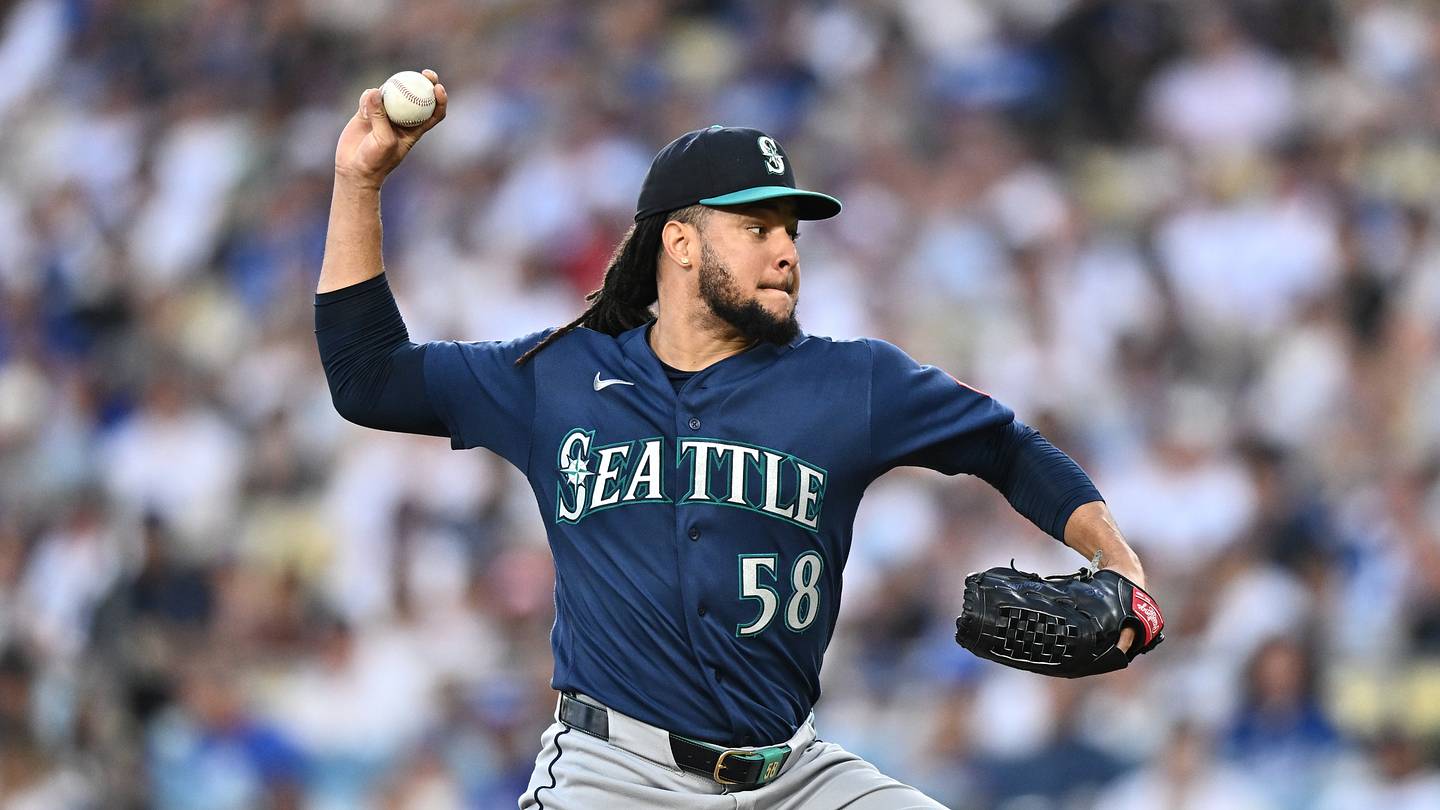
Well, if you weren’t spending the night out on Lake Union you’ve already had time to call it what it is. The Mariners moved their most expensive starting pitcher, cleared a crowded rotation and found another team willing to assume the risk attached to Luis Castillo’s contract.
Let’s be real, the only two teams willing to do this were probably the White Sox or the Cardinals. So, Seattle sent Castillo to the White Sox for reliever Seranthony Domínguez, outfielder Nolan Jones, catching prospect Boston Smith and cash considerations. That’s a four-player trade involving a three-time All-Star, but “blockbuster” oversells it.
This was a salary-driven transaction with a few potentially useful players attached.
The Luis Castillo Trade Was a Salary Dump With Useful Pieces Attached
Chicago made the deal from a position of strength. The surprising AL Central leaders needed another starter, had money available and wanted to protect the top of a rapidly improving farm system. The White Sox accomplished all three by taking on approximately $30 million in guaranteed money remaining on Castillo’s contract.
They bought a veteran starter without paying the usual prospect premium. We can admit that’s smart business.
For Seattle, the calculation made sense. Castillo entered the weekend with a 3–9 record and a 5.06 ERA through 20 appearances. The fastball still lives, the changeup is okay, but the postseason résumé is the sell. The total package no longer resembles the frontline starter Seattle acquired four years ago.
Castillo had become the sixth answer to a five-man question. The Mariners already had Logan Gilbert, George Kirby, Bryan Woo, Bryce Miller and Emerson Hancock competing for rotation work. Their attempt to squeeze everybody into the picture produced an awkward piggyback arrangement between Castillo and Miller, complete with public frustration and meetings over how the plan was communicated.
That wasn’t sustainable. Neither was paying Castillo. So Seattle made the blunt choice. They chose the younger rotation and moved the veteran contract.
Domínguez is the most immediate addition. The 31-year-old right-hander recorded a 3.99 ERA and 12 saves over 43 appearances for Chicago, giving Seattle another experienced arm to use in front of Andrés Muñoz.
He also comes with baggage. Domínguez has been inconsistent, and he’s owed roughly $10 million in 2027. He reduces Seattle’s savings and keeps this from becoming a clean financial escape. Still, swapping a declining starter’s obligation for a smaller bullpen commitment creates breathing room.
Jones is a lottery ticket. His 2023 rookie season with Colorado suggested middle-of-the-order upside, but that version has disappeared beneath injuries, strikeouts and a 2026 season spent in Triple-A. Seattle isn’t acquiring a dependable major league outfielder. It is taking a cheap swing on a former top prospect.
Smith is the most interesting piece. The 23-year-old catcher and outfielder was ranked as Chicago’s No. 15 prospect after hitting .291 with 22 home runs across the minor leagues. He gives the Mariners a legitimate developmental return at a premium position, even if calling him a future major league regular would be getting ahead of ourselves.
There is no blue-chip prospect in the deal. No one who makes Mariners fans race to pull up minor league highlights. And that was never the point.
Seattle’s real return is escaping the guaranteed portion of Castillo’s deal and avoiding the possibility of his $25 million option vesting for 2028. That option triggers if he reaches 180 innings in 2027 and finishes the season healthy. Chicago accepted that exposure because it could keep its best prospects. Seattle surrendered prospect upside because it wanted the exposure gone.
Both clubs told us exactly what they valued.
 Add us as a preferred source on Google
Follow
#Mariners #Trade #Luis #Castillo #White #Sox #Deal #Prioritizes #Payroll #Prospects