The first phase of MLB’s All-Star voting process has wrapped up. Fans dictated 100% of the vote in the opening phase, which resulted in two players at each position (and six outfielders) advancing to phase two.
The players that received the most votes in each league, Shohei Ohtani in the National League and Ernie Clement in the American League, have now been guaranteed spots in the starting lineup for the Midsummer Classic. The rest of the starters will be determined by the second phase of voting, which will run until July 2.
Of course, giving the voting power to fans often results in some teams getting more representation than others. The Blue Jays are a glowing example of this, with at least one Toronto player being voted in as a finalist for every single position in the AL. Dodgers and Phillies fans also submitted plenty of votes, lifting several of their players into top-two positions in the NL.
As a result, there were some glaring omissions across both leagues for players that missed out on a chance to start this year’s All-Star Game. While they can still make the roster in the end, they will be reserve players at best.
So, let’s take a look at the five biggest snubs from both the American League and National League after the conclusion of phase one.
American League
Kevin McGonigle – SS, Tigers

McGonigle finished third in AL All-Star voting at shortstop, but he wasn’t even close to cracking the top two, losing out to Blue Jays’ Andrés Giménez by nearly 750,000 votes. The standout rookie ranks sixth in the American League with 3.3 fWAR, while Giménez ranks 83rd at 1.2. McGonigle has been one of the most patient hitters in MLB, with a 14.1% walk rate and just a 12.9% strikeout rate. His .816 OPS and 132 wRC+ are far superior to Giménez, too, who has a .647 OPS and a 78 wRC+, both of which are well below league average.
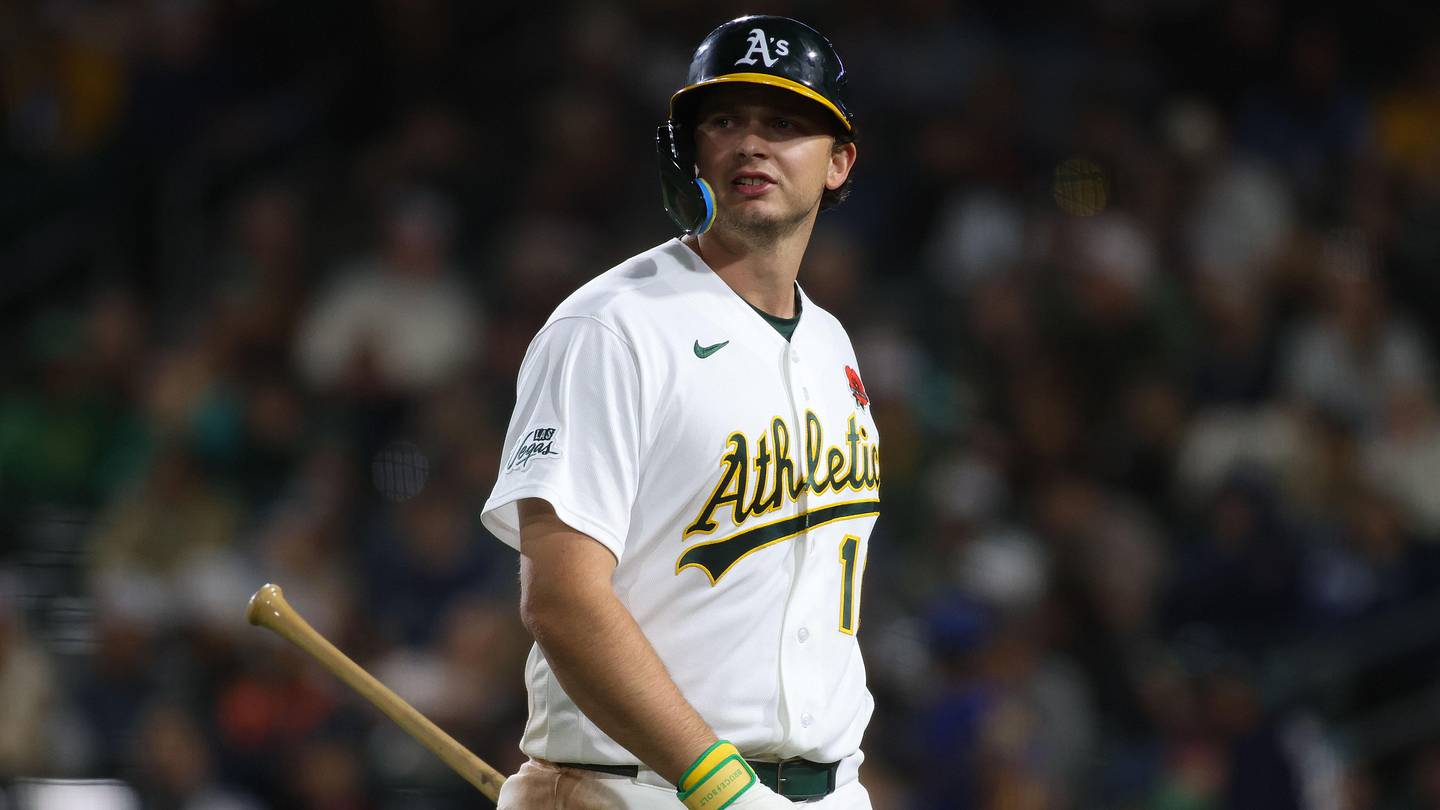
Nick Kurtz – 1B, Athletics
Blue Jays fans showed Vladimir Guerrero Jr. plenty of love in All-Star voting, which pushed Kurtz and Munetaka Murakami out of the running for a top-two spot. Kurtz has hit 19 home runs and leads MLB with 62 RBIs and 73 walks. His .959 OPS is good for sixth in MLB, too. In terms of fWAR, Kurtz ranks fifth in the AL at 3.3, while Guerrero is all the way back at No. 132 with a 0.9. It’s hard to make a single argument for why Guerrero would be selected ahead of Kurtz other than star power, but Blue Jays fans worked tirelessly to get him in. Guerrero received more than 2.45 million votes despite hitting just four home runs nearly halfway through the season, while Kurtz only tallied 948,000. Kurtz will still be an All-Star, but he deserved the chance to win a starting spot for the AL.
Dillon Dingler – C, Tigers
Dingler has arguably been the best catcher in MLB this year, and he’s certainly been better than Alejandro Kirk, who secured the No. 2 spot in All-Star voting by a fairly wide margin. Statcast ranks Dingler as the best framer of all MLB backstops and the third-best blocker. He’s an asset for any pitcher to have behind the plate, and he’s been productive offensively, too. Dingler has the highest OPS (.871) among all qualified catchers and trails only Shea Langeliers at the position with 18 home runs. Kirk, on the other hand, has played in just 27 games and has just one home run and an abysmal .548 OPS.
Munetaka Murakami – 1B, White Sox

Murakami’s record-breaking start to his MLB career wasn’t enough to land him in the final two for AL All-Star voting at first base. Although he’s currently on the 10-day IL, Murakami was turning heads on a near nightly basis through the first two months of the season. In 57 games, he racked up 20 home runs, 41 RBIs and had a .938 OPS. He was effortlessly crushing home runs and making teams look foolish for passing on him during the offseason. He hasn’t played in June, yet he still has more home runs, RBIs and extra-base hits than Guerrero.
Yandy Díaz – DH, Rays
Díaz leads the American League with 94 hits and a .331 batting average, yet he found himself finishing third in All-Star voting at DH. Rays fans didn’t do him any favors in the voting process, as George Springer received more than twice as many votes as Díaz, despite being far less productive. Springer is having one of the worst seasons of his career offensively, with a .693 OPS and eight home runs in 58 games. Díaz has a .926 OPS and 12 home runs in 74 games. Statistically, they aren’t close, yet Springer will be the one competing with Yordan Álvarez for the starting DH job at the All-Star Game.
National League
Pete Crow-Armstrong – OF, Cubs

Crow-Armstrong’s lack of All-Star votes can likely be attributed to his slow start. But there’s been no better hitter in MLB during the month of June than the Cubs’ center fielder, who has a 1.341 OPS with 10 home runs and 18 RBIs in his last 20 games. His season OPS has ballooned to .886, and he’s also been the best defensive outfielder in MLB, with 15 outs above average per Statcast. Crow-Armstrong finished 10th in All-Star voting among NL outfielders, missing out on the cut behind lesser players such as Brandon Marsh and Teoscar Hernández, both of whom made the top six.
Otto Lopez – SS, Marlins
It’s not too surprising that the Marlins star isn’t in contention to start the All-Star Game, but he’s certainly deserving of it. Despite leading MLB in hits with 107 and boasting a league-best .340 batting average, Lopez received just over 650,000 votes, which was only good enough for fifth among NL shortstops. He’s certainly played better than Mookie Betts, who has struggled all season for the Dodgers, but this is yet another example of larger fan bases dominating the voting process. Lopez ranks sixth in the NL with 3.4 fWAR, while Betts ranks 104th with 1.0.
JJ Wetherholt – 2B, Cardinals
Wetherholt has been sensational in his first MLB season, ranking seventh in the National League with 3.4 fWAR. It’s his defense that stands out the most. The Cardinals’ second baseman ranks third in MLB with 14 outs above average, which trails only Bobby Witt Jr. and Crow-Armstrong. He’s been a superior player in every facet of the game compared to Bryson Stott, yet the Phillies second baseman received over 800,000 more votes than Wetherholt, who finished eighth in All-Star voting at the position. It’s somewhat surprising Cardinals fans didn’t get behind their Rookie of the Year contender more amid a better than expected season in St. Louis.
James Wood – OF, Nationals

There’s not much more Wood could have done to secure a top-two spot in phase one of voting. He’s clubbed 20 home runs, stolen 13 bases and boasts a .909 OPS. His numbers immediately jump off the page, and although he strikes out at a high rate, he more than makes up for it with his incredible bat skills. He leads MLB with 70 runs scored, and he’s locked in a multi-player tie for the most extra-base hits (39) in the National League. There’s simply no reason he wasn’t included in the top six over the likes of Marsh, Hernández and even Ronald Acuña Jr.
Brandon Lowe – 2B, Pirates
Yet another National League infielder who didn’t get the respect they deserve in All-Star voting. Low finished seventh at the position in the first phase of voting, behind some far less productive players such as Stott, Hyeseong Kim and Ketel Marte. Lowe has a .829 OPS with 18 home runs and 49 RBIs while playing lockdown defense. He has seven outs above average, which ranks 15th among all fielders, and his 2.5 fWAR is good for 20th in the National League. Lowe has been outstanding in his first season with the Pirates, but he didn’t get much support in the voting process.
More MLB from Sports Illustrated
 Add us as a preferred source on Google
Follow
#Biggest #Snubs #Phase #MLB #AllStar #Voting